
Knee Replacement and Physiotherapy
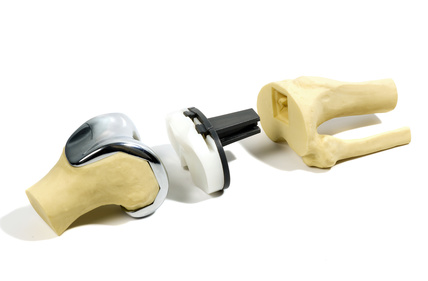 As our population continues to age and life expectancy increases with many people wishing to keep active longer, there are a growing number of people who will have a knee replacement.
Our physiotherapy service sees a great number of people who have had a knee replacement and are in the process of recovering from this surgery. Our home visit physiotherapy service is based in Lichfield and our mobile physiotherapists visit Sutton Coldfield, Tamworth, Rugeley, Walsall and Cannock. The information on this page tries to give more detail about what is involved with a knee replacement and why physiotherapy is an essential part of the recovery process.

Knee Anatomy
The knee is made up of 3 bones - the tibia (shin bone) the femur (thigh bone) and the patella (knee cap), in essence it is a hinge joint with femur articulating with the tibia below and this joint bearing most of the load. The patella is a sesamoid bone (the largest in the body) and is situated in the quadriceps tendon and helps connect the 4 muscles of the front thigh (the quadriceps) to the tibia below. Inside of the knee joint and (as with all joints) between the tibia and femur is cartilage which reduces friction and improves shock absorption, in the knee however unlike other joints there are two special semi circular fibro-cartilage rings called the menisci. These sit on the tibial plateau beneath the femur and help the femur to fit neatly onto the tibia below and also aid greatly with shock absorption. Inside of the knee joint itself are two key ligaments, the anterior cruciate ligament (ACL) and posterior cruciate ligament (PCL) which stop excessive forward and back movement of the femur/tibia. The patella itself has cartilage on its underside which reduces friction between the patella and femur underneath. Finally there are two ligaments either side of the knee - the medial and lateral collateral ligaments.
Arthritis & Knee Replacements
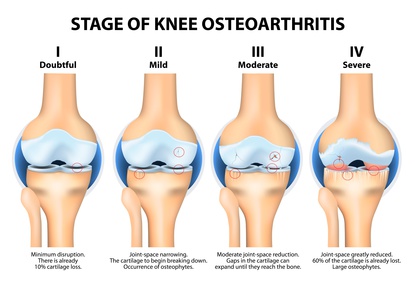
Phew, glad the anatomy lesson is over now! So, how does all of the above relate to having a knee replacement and recovering from it? Well firstly if you are going to get it replaced it seems reasonable to know some of the basics of what you are getting replaced. Secondly it helps with understanding the process that leads to needing a replacement knee- osteoarthritis. As described earlier inside the knee joint is cartilage - this is inside every moving joint of the human body and is present whenever bone moves over bone. Cartilage reduces the amount of friction in the joint and aids with shock absorption - in good health cartilage will look like a smooth ice rink when examined under arthroscopy. However as we age this cartilage starts to wear out, it begins to get pitted and holes develop in it. This in turn leads to inflammation, increased load on the bones and as this process carries on bony spurs called osteophytes may develop. This overall process is called osteoarthritis (often shortened to OA) and is the main reason for a knee replacement. A reasonable question at this point would be: "If osteoarthritis is a process of wear and tear of the cartilage - why doesn't everyone need a knee replacement at some point?" Well, that is a difficult one to answer and the underlying reasons are still being investigated - currently it is thought that genetics play a large role. For instance if your mother, grandmother and aunt etc have all had a knee replacement at 70, there will be a high likelihood that you will need a joint replacement at some point. High BMI (Body Mass Index) has also been linked to arthritis and certainly it makes sense that if you put more load through a joint it will wear out quicker.
What To Expect After A Knee Replacement
So, you are going to get a knee replacement... what can you expect? Well, to some extent this will depend on the hospital that you go to and in general they will have given you a fair amount of information about what to take and how to prepare - so we will probably leave this bit and jump straight to after the operation. On waking up I think it would be reasonable to expect to be sore! This is a major orthopaedic operation and your knee will be very swollen, painful and in a large dressing. Ward staff and physiotherapists will be keen to get you up and mobilising on day one post-operation if at all possible, usually you will use a frame initially and then progress down to crutches. If you have stairs at home the physiotherapist will want to check that you are able to use a set of crutches on the stairs and have safe technique. On a busy hospital ward you are likely to see a physiotherapist once a day and on average you should expect to be in hospital at least 3 - 5 days before being sent home where ideally you will see a community physiotherapist or attend an out-patient clinic.
Physiotherapy is an essential part of the recovery process from a knee replacement and this is the point at which a home visit physiotherapy service such as ours really comes into its own and can help you recover as quickly as possible. The first few weeks are a critical period in your recovery and ideally you will see a physiotherapist several times a week for mobility practice, strengthening exercises, stretching and working on the range of motion of the joint.
As you begin to improve and your range of motion at the knee increases the number of sessions with your physiotherapist will slowly reduce - as at this point you should be able to walk independently, have good range of movement at the joint and be working through an exercise programme. As you improve further over the following months is its essential that you have regular reviews with your physiotherapist to assess progress, discuss any problems and modify your exercise programme in order to best achieve your goals. It is vital that you continue with your exercises and physiotherapy throughout your recovery and it is best to think in terms of approximately 6mths to a year to achieve a full recovery, throughout which you will need access to physiotherapy.
How Can We Help With Physiotherapy After A Knee Replacement?
ThreeSpires Physiotherapy provides patients who have had a knee replacement a way to access regular, high quality physiotherapy without the necessity of visiting an out-patients physiotherapy clinic. In the first few weeks after a knee replacement getting out of the house can be very difficult and painful and having one of our mobile physiotherapists visit you at home enables you to still access physiotherapy. With our service you can have the optimal number of sessions per week of physiotherapy at home in order to maximise your recovery. If you have had a knee replacement via the NHS (as the majority do) then due to budget constraints it is unlikely that you will receive the optimum number of sessions per week, in which case our service can supplement the NHS provision and enable you to make better progress.
Due to the complexity of the problems that knee replacement patients face, the need to clearly determine any protocols from the surgeon and the lengthy assessment process; treatment sessions are 1 hour for all sessions including follow ups. It is our experience that this extended period of time allows for a much greater benefit and response to therapy and is especially beneficial for patients who are in significant pain and benefit from a slower and more progressive approach to rehab.
What To Expect From Physiotherapy At Home After A Knee Replacement
Each physiotherapy session is different and varies according to the needs of the patient and how they are recovering after their knee replacement but below is a description of a general process and should give you a good idea of what to expect with physiotherapy at home after your knee replacement.
After making an appointment for an initial physiotherapy assessment one of our mobile physios will visit you at home to conduct an initial assessment for your knee replacement. The physiotherapy session begins with a chat with your physio about your knee replacement, when you had the opertaion, how you are recovering and your goals for your recovery. This is a key part of the initial physiotherapy assessment and gives your physio a clear idea about you and what you want from physiotherapy. Next your physiotherapist will conduct a physical assessment looking at the movement at your knee, your mobility, strength and balance. After this they will prepare a program of exercises that you need to complete and discuss how best to manage your recovery after your knee replacement. Finally they will book any follow up physiotherapy sessions.
Frequently Asked Questions About Physiotherapy & Knee Replacements
As a community physiotherapy service our physios get a lot of questions about how physiotherapy can help after a knee replacement and the benefits of home visit physiotherapy after a knee replacement. Below are some of the most common questions our physios get about knee replacements and physiotherapy.
1. Which areas do your mobile physios cover? our physiotherapists are all mobile and our home visit physiotherapy servcie is available in the following areas: Sutton Coldfield, Lichfield, Tamworth, Walsall, Cannock, Rugeley & Burton for people recovering after a knee replacement.
2. Is your physiotherapy service available in care homes? Yes our mobile physiotherapists are happy to visit care or nursing home and have a large amount of experience of helping patients recover after a knee replacement in a care home.
3. How many sessions of physiotherapy will I need after my knee replacement? To answer this question and give you an estimate of number of sessions of physiotherapy at home we would need to do an initial assessment. Everybody is individual in how quickly they recover after their knee replacement and to know how many sessions you need, you would have to have an initial assessment by one of our physios at home.
4. How quickly can your physio see me after my knee replacement? Our physiotherapists work hard to ensure that all of our patients are seen as quickly as possible. Usually our physios can see most people at home within a week.
5. Do your physios see patients with dementia after a knee replacement? Yes, our physiotherapists have a large amount of experience of working with patients with dementia after knee replacements.
So if you have had a knee replacement and want to improve your recovery and would like home visit physiotherapy, then please do get in touch, we are a home visit physiotherapy service based in Lichfield and serving surrounding areas such as Burntwood, Cannock, Tamworth, Sutton Coldfield, Walsall, Rugeley and Cannock. You can call us on 0788 428 1623 email us at enquiries@threespiresphysiotherapy.co.uk or alternatively use the contact form
REQUEST A CALLBACK
Just fill in the form below and give us a quick idea of your problem/request and a postcode so we can check if you are in our travel area.